


Key Takeaways
- The dive bezel rotates counterclockwise only to prevent accidental time underestimation underwater
- Align the bezel's zero marker with your minute hand before descending to track elapsed dive time
- Read elapsed time by checking where your minute hand points on the bezel's numbered scale
- The first 15 to 20 minutes show individual minute markings for precise safety stop timing
- Unidirectional rotation adds a safety margin if knocked accidentally during your dive
- Always reset your bezel to 12 o'clock position between multiple dives on the same day
- Tritium illumination on the zero marker ensures you can read your bezel in complete darkness at depth
How to Use a Dive Watch Bezel: What It Actually Does
Let's get straight into what matters when you're timing a dive: understanding your dive watch bezel isn't complicated, but getting it wrong underwater can compromise your safety. The rotating bezel on a proper dive watch exists for one purpose: tracking elapsed time when you're submerged and can't afford to guess.
We're going to walk through exactly how this underwater timing mechanism works, from the moment you check your kit before descent through to surfacing safely. The beauty of a mechanical timing system is its reliability. Unlike digital devices that can fail, flood, or run out of battery at depth, a quality dive bezel continues working regardless of conditions. That's precisely why professional dive watches still feature this proven technology as standard equipment.

Understanding Your Dive Watch Bezel Components
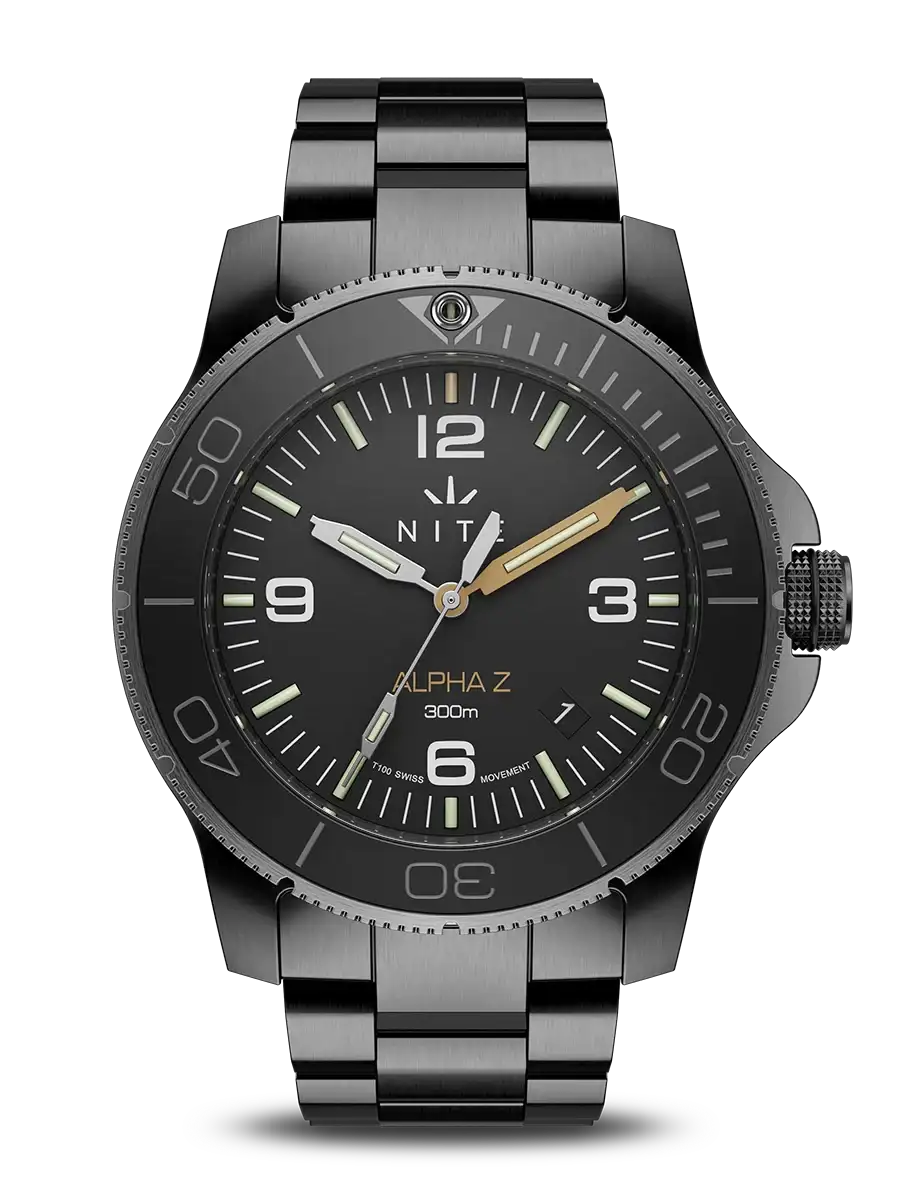
Before you can use the bezel effectively, you need to know what you're looking at. The zero marker sits at 12 o'clock, usually a luminous triangle that glows in darkness. This is your reference point for every dive.
On watches with tritium illumination, this marker glows constantly for up to 20 years without charging. That's essential when you're operating at depth where ambient light disappears entirely. The minute markings run around the rotating bezel, with the first 15 minutes showing individual graduations for precise safety stop timing. After that, you'll see 5 minute intervals for tracking bottom time.
Why Dive Watch Bezels Only Rotate Counterclockwise
Here's something fundamental: dive watch bezels only rotate counterclockwise, never clockwise. This isn't a design limitation but a deliberate safety feature that's saved lives.
Think about what happens if your bezel gets knocked during a dive. If it could rotate both ways, an accidental clockwise movement would make it appear you've been underwater for less time than you actually have. That could lead you to exceed your no decompression limit or cut short a required safety stop.
With unidirectional rotation, any accidental knock only rotates the bezel counterclockwise, making your elapsed time appear longer than reality. You might surface slightly earlier than necessary, but you'll never unknowingly exceed safe limits.
Setting Your Dive Watch Bezel Before Descending
Right, here's where theory becomes practice. Setting your dive watch bezel correctly takes about ten seconds once you're familiar with it, and there's a specific sequence that works every time.
Step 1: Check your current time and note where your minute hand sits.
Step 2: Rotate the bezel counterclockwise until the zero marker aligns exactly with your minute hand's current position.
Step 3: Double check the alignment. Your minute hand and the bezel's zero marker should line up precisely.
Step 4: As time passes, whatever number your minute hand indicates on the bezel scale is your exact elapsed dive time in minutes.
Make it part of your pre descent checks alongside verifying your air supply and buddy communication. The entire process becomes automatic after a few dives.

Reading Elapsed Time Underwater
Once you've descended, reading your elapsed time indicator is remarkably straightforward. Look at your minute hand. Whatever number it points to on the bezel scale is your elapsed time in minutes. If it's at 15, you've been underwater for 15 minutes. No mental arithmetic required.
The first 15 to 20 minutes show individual minute markings because this is when accuracy matters most. For safety stops at 5 metres, you need to maintain that depth for at least 3 minutes, and those individual graduations let you track this precisely.
This is where proper illumination technology becomes critical. Traditional luminous paint fades within hours, but tritium glows continuously throughout your entire dive.
Understanding Hand Positions for Accurate Reading
Your hour hand is irrelevant when reading the bezel. Only the minute hand matters.
Here's a quick example: you set your bezel at 14:23. Ten minutes later at 14:33, your minute hand points to 10 on the bezel. That's 10 minutes elapsed. Your hour hand position doesn't matter. Even when the hour hand crosses between numbers on your dial, ignore it completely and read only the minute hand against the bezel scale.
Using Your Dive Watch Bezel for Safety Stops
The bezel's most critical dive bezel function is timing your safety stop, that mandatory pause at 5 metres before surfacing. Standard practice requires a minimum 3 minute safety stop at 5 metres after any dive deeper than 10 metres.
When you reach 5 metres, note your current elapsed time on the bezel, then maintain that depth whilst watching your minute hand advance three full minutes. The individual minute graduations let you track this precisely without guessing.
Understanding water resistance ratings becomes relevant for repeated diving. Choosing durable dive equipment with proven performance makes a genuine difference when safety matters most.
Resetting Between Multiple Dives
After surfacing and logging your dive, rotate the bezel counterclockwise until the zero marker returns to 12 o'clock. This reset is critical because residual nitrogen from your first dive affects your no decompression limits on subsequent dives.
Your bezel needs to start from zero to track that dive's elapsed time accurately. If you forget to reset it, you'll be reading residual time from your first dive, which gives you completely incorrect data. When you're ready for your second descent, set the bezel exactly as you did for the first dive.
Common Dive Watch Bezel Mistakes to Avoid
We've seen certain errors repeatedly with new divers. Here's what to watch for:
Misalignment at Start: Setting the zero marker even one minute off creates compounding errors. Double check before descent.
Reading the Hour Hand: Only the minute hand matters. The bezel scale is separate from your dial where the hour hand sits.
Forgetting to Set the Bezel: Make bezel setting part of your consistent pre dive checklist.
Not Resetting Between Dives: Always reset to 12 o'clock after your first dive, or your second dive shows incorrect elapsed time.
Poor Glove Practice: Practice the grip technique on land until it's instinctive.
Practice Exercises for Dive Watch Bezel Mastery
Nothing replaces hands on practice. These exercises build the muscle memory you need underwater:
Dry Land Timing: Set your bezel to time various activities. Read your elapsed time every few minutes to build familiarity with how the minute hand progresses.
Glove Operation Drills: Wear your diving gloves and set the bezel repeatedly. Aim for 20 repetitions until it feels natural.
Safety Stop Simulation: Set your bezel and time exactly 3 minutes whilst staying still. Watch the minute hand advance three full markings.
Equipment familiarity directly improves safety. When you can operate your dive watch bezel instinctively, you free up mental capacity for managing the more complex aspects of your dive. Our Alpha series and Alpha Z collection feature rotating bezels engineered for exactly this purpose, with tritium illumination and proven performance at depth.
Frequently Asked Questions
What is the purpose of a dive watch bezel? A dive watch bezel tracks elapsed time underwater by providing a visual reference against your minute hand. It's designed as a fail safe timing mechanism that works mechanically without batteries or electronics, ensuring you can monitor dive duration and conduct safety stops accurately even if your dive computer fails.
How does a rotating bezel work on a dive watch? You align the bezel's zero marker with your minute hand before descending. As time passes, your minute hand moves around the dial, pointing to numbers on the bezel that show your exact elapsed time. The unidirectional rotation prevents accidental adjustments that could underestimate your time at depth.
How do I use a dive watch bezel correctly? The bezel's zero marker should align exactly with your minute hand's current position. Double check this bezel operation as part of your pre descent equipment check.
Can I use the bezel for timing safety stops accurately? Yes. The individual minute markings in the first 15 minutes allow precise timing of your 3 minute safety stop at 5 metres. Note your elapsed time when you reach safety stop depth, then maintain position until your minute hand advances three full graduations.
How do I reset my bezel between dives? After surfacing and logging your first dive, rotate the bezel counterclockwise until the zero marker returns to 12 o'clock. Never begin a second dive without resetting as you'll get completely incorrect elapsed time readings.
Does the hour hand position affect bezel reading? No. Only the minute hand matters when reading elapsed time. The hour hand sits on your fixed watch dial whilst the bezel is separate. Ignore the hour hand entirely.
Why is tritium illumination important? Tritium glows continuously for up to 20 years without light charging. At depth in low visibility, conventional luminous paint fades within hours. Tritium ensures you can read your zero marker clearly throughout your entire dive.
Can I rely on my bezel if my dive computer fails? Yes. A mechanical bezel provides critical backup timing when electronic systems fail. Whilst you lose depth calculations without your computer, the bezel still tracks elapsed time accurately, allowing you to conduct a controlled ascent and proper safety stop.
How do I operate my bezel with thick gloves? Use your thumb on one side and four fingers on the opposite side, applying pressure across the entire width. Practice this on land whilst wearing your actual diving gloves until it becomes automatic.


